|
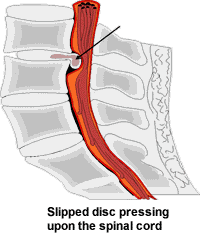
Slipped disc is the common name for what
happens when one of the intervertebral discs that act as a cushion between
the vertebrae (bones of the backbone) slips out of position. It occurs most commonly in the
lumbar region,
i.e. the lower part of the back, mainly as a result of strain
caused by lifting loads. A slipped disc can occur from adolescence onwards. In a
young person, the cause is usually a direct injury or strain. In old age,
However, backache, is more likely due to general degeneration as the discs dry
up and shrink. The backbone consists of a curved, flexible column of twenty four separate bones, seven in the neck (cervical), twelve in the back (thoracic) and five in the lower back (lumbar) plus the sacrum and coccyx or tail bone at the bottom. Between each of the movable bones or vertebrae, is a cushion of cartilage, called an intervertebral disc. This allows for a small amount of movement in each direction; it also acts as a natural shock absorber. PHYSICAL SYMPTOMS If a lumbar disc slips out of place, the usual result from local backache is sciatica. Pain is felt in the back, back or side of the buttocks and the back or side of the thigh and calf. Either the heel or the top of your foot may be painful. If a new disc is involved it is likely to give severe pain, with tingling and numbness usually affecting either the inner or outer aspect of the arm and hand. DIAGNOSIS AND TREATMENT During the period of severe pain, rest is essential, combined with generous doses of analgesics. A cervical collar or a corset may be useful during the recovery period, while gradual exercises will strengthen your back and neck muscles and provide a natural, flexible splint. Avoid lifting anything heavy for the foreseeable future. Diseases such as Herpez and diabetes mellitus sometimes show symptoms similar to those produced by a slipped disc. These will have to be rules out by appropriate tests. If the pain is acute, it may be necessary to lie on your back for a matter of weeks. If the vertebrae at the neck are affected, then a splint in the form of a surgical collar may make this unnecessary. In less severe cases, the disorder may respond to physiotherapy in the form of teaching how to improve your posture. Physical manipulation will be administered by a physiotherapist. It is quite feasible, if the disorder persists, to cutout the protruding part of the disc surgically. |